
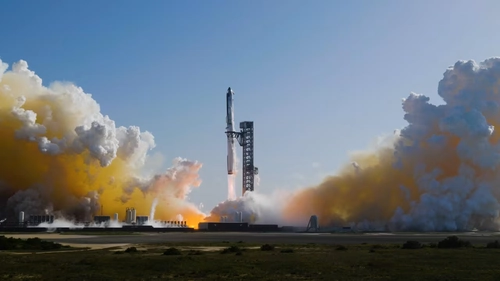
A commercial launch bottleneck has spurred an unprecedented wave of investment in space infrastructure and applications, with $100 billion flowing into the sector since SpaceX began limiting access to its Falcon 9 rockets.
The surge in funding, detailed in a report by Space Capital, comes as SpaceX, the dominant player in the launch market, has struggled to keep up with demand. SpaceX has been prioritizing its Starship program, which has led to a reduction in Falcon 9 launches.
This has created a ripple effect throughout the space industry. Companies that rely on Falcon 9 for rides to orbit have been forced to seek alternative options, driving up prices and creating a backlog of missions.
“SpaceX is the linchpin of the launch market,” said Chad Anderson, founder of Space Capital. “When SpaceX reduces launch supply, it creates a bottleneck that drives up prices and forces companies to invest in alternative launch solutions.”
The report found that investment in space infrastructure, including launch vehicles, satellite manufacturing, and ground stations, has more than doubled since 2019. Investment in space applications, such as satellite internet and Earth observation, has also increased significantly.
One of the biggest beneficiaries of this investment surge has been Rocket Lab, a U.S.-based launch provider that competes with SpaceX. Rocket Lab has seen its stock price soar in recent months as investors bet on its ability to fill the gap left by SpaceX.
Other companies that are benefiting from the investment surge include Relativity Space, which is developing a fully reusable launch vehicle, and Firefly Aerospace, which is building a small satellite launch vehicle.
The investment surge is expected to continue in the coming years as the space industry continues to grow. Space Capital predicts that the total value of the space economy will reach $1 trillion by 2040.






شمـا اولیـن نفـر هستـید کـه نظـر خـود را ثبـت مـی کنیـد.
🗩ثبـت نظر: