
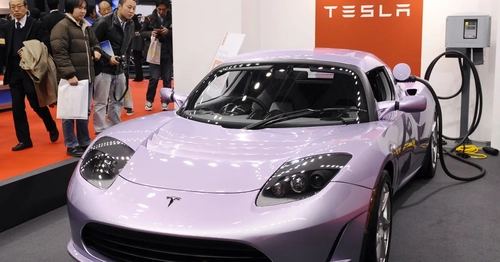
Nine years after its initial reveal, Tesla’s second-generation Roadster is finally set to debut on Thursday. But the electric car landscape has changed dramatically in the intervening years.
When Elon Musk unveiled the Roadster 2.0 in 2017, it was a shock to the system. The promise of a 0-to-60 mph time of 1.9 seconds and a range of 620 miles felt like science fiction. Electric cars were still largely seen as niche vehicles, and the idea of a high-performance EV was barely a blip on the radar.
Now, the EV market is crowded, and skepticism about electric hypercars is growing. Companies like Rimac and Pininfarina have already delivered on similar performance promises, and the hype surrounding electric speed has cooled somewhat. Tesla itself has shifted its focus to more mainstream EVs like the Model 3 and Model Y.
“The original Roadster was about proving that electric cars could be cool and fast,” says Sam Abuelsamid, principal analyst at Guidehouse Insights. “The Roadster 2.0 was supposed to be the halo car that showed the world what Tesla was capable of. But now, Tesla has already established itself as a leader in the EV market. The Roadster 2.0 feels less essential.”
The Roadster 2.0 is still expected to be a very fast car, but it’s entering a different world than the one it was originally designed for. The question now is whether it can still capture the imagination of car enthusiasts and justify its high price tag.
“It’s a bit of a gamble for Tesla,” says Jessica Caldwell, executive director of insights at Edmunds. “The market for hypercars is relatively small, and there’s a lot of competition. Tesla will need to convince buyers that the Roadster 2.0 is worth the wait and the money.”






شمـا اولیـن نفـر هستـید کـه نظـر خـود را ثبـت مـی کنیـد.
🗩ثبـت نظر: