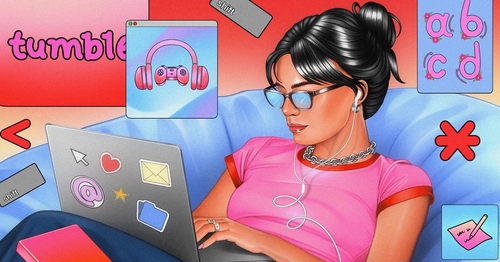
a certain kind of person writes in all lowercase now. why?
it started, as so many things do, on twitter. a few cool people—artists, musicians, meme-makers—began typing in all lowercase. it wasn’t a glitch, or a cry for help, or a deliberate act of rebellion. it was…a vibe. a quiet, unassuming aesthetic choice. and then, as these things also do, it spread.
now, all lowercase is everywhere. it’s in newsletters, instagram captions, even the occasional press release. it’s a subtle shift, but a noticeable one. and it’s one that seems to be driving some people absolutely bonkers.
“it’s lazy,” one friend texted me. “it feels disrespectful.” another complained that it was “hard to read.” a third simply asked, “why?”
the answer, as with most things on the internet, is complicated. but at its core, lowercase is about a rejection of authority, a desire for intimacy, and a subtle form of self-expression. it’s a way of signaling that you’re not trying too hard, that you’re not taking yourself too seriously.
“i think it’s a way of signaling that you’re in on the joke,” says rachel syme, a cultural critic and author of the arrest. “it’s a way of saying, ‘i know this is all a bit ridiculous, and i’m not going to pretend otherwise.’”
the history of lowercase is a long and winding one. for centuries, uppercase letters were reserved for important things—names, titles, the beginning of sentences. lowercase letters were for the everyday, the mundane. but in the 19th and 20th centuries, as typography became more sophisticated, lowercase began to gain prominence. designers realized that lowercase letters were more readable, more elegant, and more human.
“lowercase is more approachable,” says sarah hyndman, a type designer and author of why logos matter. “it feels less formal, less imposing.”
today, lowercase is often used in branding to convey a sense of friendliness and authenticity. think of companies like everlane and spotify, which both use lowercase in their logos.
but the lowercase trend on social media is different. it’s not about branding or marketing. it’s about personal expression. it’s about creating a sense of intimacy and connection.
“it feels more like a conversation,” says emily reynolds, a writer and editor. “it feels like someone is talking to you, not at you.”
of course, not everyone is on board with the lowercase trend. some people find it annoying, unprofessional, or even childish. and that’s okay. there’s no right or wrong way to use language.
but for a growing number of people, lowercase is a way of signaling that they’re part of a certain tribe, a certain sensibility. it’s a way of saying, “i’m cool with being informal, i’m cool with being a little bit weird, and i’m cool with not taking myself too seriously.”
so the next time you see someone writing in all lowercase, don’t get mad. just remember that it’s probably not a glitch, or a cry for help, or a deliberate act of rebellion. it’s just a vibe.






شمـا اولیـن نفـر هستـید کـه نظـر خـود را ثبـت مـی کنیـد.
🗩ثبـت نظر: