
Scientists have been quietly running a decade-long experiment in the ocean, and the results are starting to come in. They’ve been studying what’s known as “deep reefs”—those found between 30 and 150 meters below the surface—and the creatures that call them home. These reefs are often overlooked in favor of their shallower cousins, but they’re increasingly important as shallow reefs die off due to climate change.
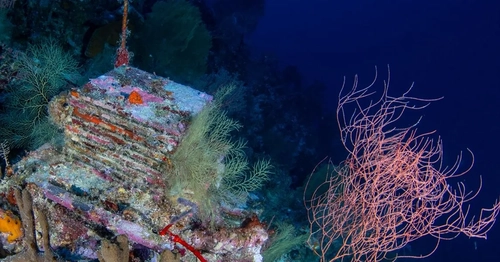
To understand how these deep reefs function, a team led by marine biologist Peter Etnoyer at the University of North Carolina at Wilmington deployed a series of artificial structures in 2014 off the coast of North Carolina. These weren’t just any structures; they were designed to mimic the complex habitats found on natural reefs. They included everything from concrete blocks to PVC pipes, and were covered in a variety of surfaces to attract different types of marine life.
“We wanted to create a sort of ‘reef in a box’ that we could monitor over time,” says Etnoyer. “This would allow us to see how different species colonize these structures, and how the community changes over the years.”
The team recently retrieved the structures after 10 years, and the results have been surprising. They found that the artificial reefs had become home to a diverse array of creatures, including fish, crabs, shrimp, and even some larger predators. The structures were also covered in a thick layer of algae and invertebrates, creating a vibrant and thriving ecosystem.
“We were really struck by how quickly these structures were colonized,” says Etnoyer. “It just goes to show how important these habitats are, and how quickly they can recover if given the chance.”
But the experiment also revealed some challenges. The structures were heavily impacted by biofouling—the accumulation of organisms on submerged surfaces—which made it difficult to study the underlying community. They also had to contend with strong currents and occasional storms, which could damage or displace the structures.
Despite these challenges, the experiment has provided valuable insights into the ecology of deep reefs. It’s shown that these reefs are capable of supporting a diverse range of life, and that they can play an important role in the recovery of damaged ecosystems. It’s also highlighted the need for more research into these often-overlooked habitats.
“Deep reefs are a really important part of the ocean ecosystem,” says Etnoyer. “They’re often overlooked, but they’re increasingly important as shallow reefs decline. We need to understand how these reefs function, so that we can protect them for future generations.”






شمـا اولیـن نفـر هستـید کـه نظـر خـود را ثبـت مـی کنیـد.
🗩ثبـت نظر: